


Regen’s Polyhouse construction
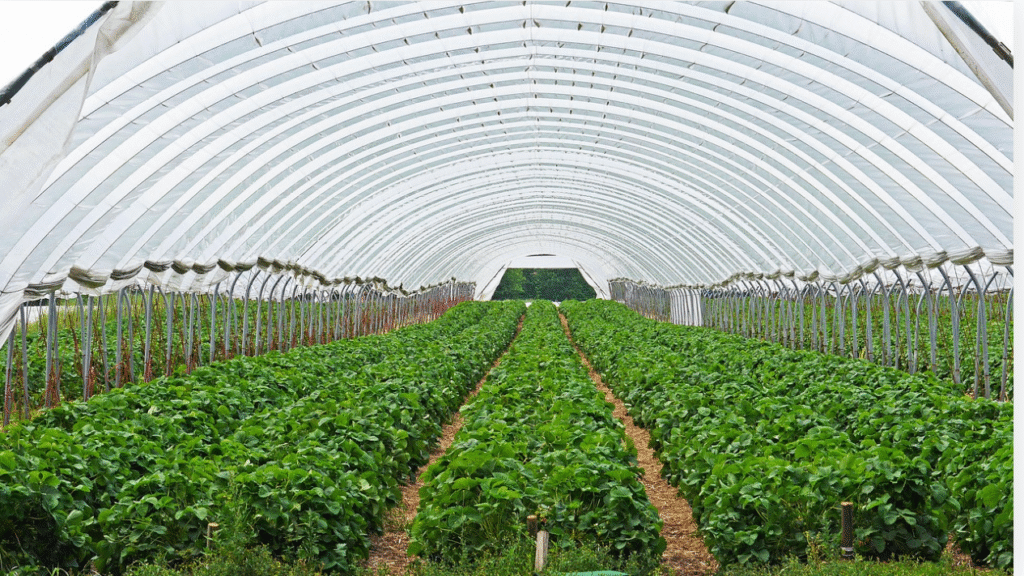
A polyhouse is a protective agricultural structure with transparent polyethylene sheeting that creates a controlled environment to cultivate crops like high-value vegetables, flowers, and fruits. It offers numerous benefits, including extending growing seasons, regulating temperature, humidity, and light, protecting against pests and adverse weather, conserving water, and enabling year-round production, which leads to higher crop yields and improved profits for farmers.
Regen’s polyhouses represent the most advanced type of greenhouse. Our polyhouse structures are constructed from galvanised iron, and the covering materials consist of UV-stabilized polyfilm. This design takes advantage of controlled climate conditions, by optimising plant growth across various seasons. The dimensions of a Regen polyhouse range from small-scale units to large industrial buildings, accommodating diverse polyhouse farming needs based on specific requirements and available resources. Additionally, our polyfilm sheets effectively isolate the internal environment from the external conditions.
It produces superior products: a consumer seeks premium offerings in the food sector. Providers of high-quality food items are unconcerned about their demand. A Regen’s polyhouse is a protected structure equipped with appropriate technology and instruments that provide the effective monitoring of crop development and growth. You possess the authority to regulate the water and nutrient provision in a polyhouse, as it facilitates the maintenance of industrial quality standards. Consequently, you will produce superior products that will enhance your revenues.
Intellect The climate control element in Regen’s polyhouse enables plant cultivation in regions with wholly adverse environmental conditions for agricultural production.
Regen’s polyhouse is equipped with several instruments to regulate temperature, humidity, and air ventilation. The fan pad system implemented in the polyhouse assists in regulating its internal temperature. Furthermore, the digital control unit and sensing devices provide the monitoring of internal climatic conditions. In Regen’s polyhouses, vegetables like cucumbers and indeterminate tomatoes are cultivated vertically. Efficient crop production methods allow cultivators to optimise space within a polyhouse, leading to a yield increase of around three to four times.
Regen’s polyhouse systems are engineered to enhance agricultural yield by about 10 to 12 times, contingent upon the crop type and necessary management measures. Growers can regulate the required temperature and provide the appropriate fertiliser supply in this polyhouse. All these elements collectively lead to optimal agricultural yields per unit area. Regen’s Polyhouse employs contemporary methods like aeroponics and hydroponics to markedly improve crop yield.
NV-Type is a naturally ventilated regeneration system. The NV-Type polyhouse is a fundamental greenhouse variant equipped with climate control elements. Consequently, specific climatic circumstances influence the flora and crops within your polyhouse. We offer in situ monitoring systems for soil pH, electrical conductivity, and nutrients, in addition to drip irrigation systems, foggers, insect control systems, and ventilation controls. These systems cannot entirely regulate external conditions; however, they do affect the crop cycle and overall yield.
EC-Type is an environmentally controlled polyhouse. In this type of polyhouse, we offer sophisticated instruments and technology for the monitoring and regulation of soil pH, electrical conductivity (EC), organic carbon, nutrients, humidity, sunshine, temperature, and other parameters. Monitoring and controlling mechanisms in a polyhouse extend the crop duration while enabling the cultivation of the season’s most exotic off-season crops.
Regen’s Polyhouses are highly advantageous for organic agriculture due to their numerous food quality and environmental benefits.
Benefits of Crops:
Regen’s polyhouses are presently employed to nurture nearly any crop under a synthetic canopy. These polyhouses may produce a diverse range of crops, from off-season fruit kinds to the most exotic flowers.
Most lucrative crop varieties achieved by the utilization of Regen’s polyhouses are:
Difference Between Polyhouse and Greenhouse:
All types of protected cultivation structures are commonly known as greenhouses for their ability to create a greenhouse effect artificially by controlling the interior environment. A polyhouse is a type of greenhouse structure where UV-stabilised polyethylene is used as the cover material.
A. Greenhouse: A greenhouse is made of some kind of transparent material to create a microclimate inside the house. Different materials like glass, wood, polyethylene, etc. are used as greenhouse covers to create the microclimate. When a greenhouse is made with a glass cover, it is referred to as a glass greenhouse or glass house.
B. Polyhouse: A polyhouse is one type of greenhouse where polyethylene is used as the cover. In India, polyhouse farming is the most popular greenhouse technology for its low cost of construction. Lath house is another greenhouse technology where wood is used as the cover.
A polyhouse is economical compared to a glass house or glass greenhouse, but the latter is more durable than a polyhouse and is more suitable in cold places where it snows.
Phone Number
+91 9696463077
Email Address
Info@regenfarmtech.com
Location
Akhari, Akhari Bypass City/District Varanasi, State:U.P. PIN:221011
Lorem ipsum dolor sit amet, consectetur adipiscing elit. Ut elit tellus, luctus nec ullamcorper mattis, pulvinar dapibus leo.
© 2025 Regen. All Rights Reserved. Developed By Dizi Global Solution