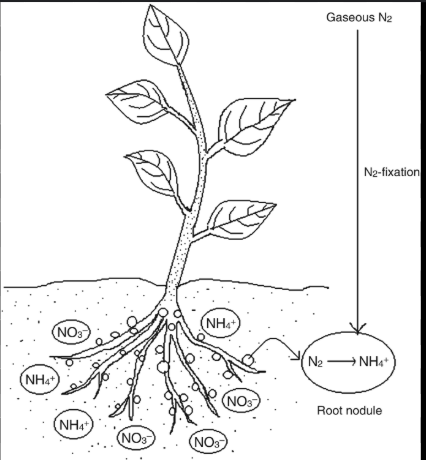
The rhizobial bacterial species that constitute Nitrofix are widely distributed in nature and establish nitrogen-fixing symbioses with leguminous plants. Nitrofix contributes to soil restoration and health.
Nitrofix rhizobia can inhibit the reproduction of harmful bacteria by colonising crop roots. This capability allows Nitrofix to enhance disease resistance, mitigate crop disease risk, and promote systemic resistance in plants simultaneously.
Utilising Nitrofix on legume crops may reduce the reliance on nitrogen fertilisers, improve crop quality and yield, diminish environmental pollution resulting from chemical fertiliser production and use, and effectively eliminate root rot and stubble.
Nitrofix can lower pollutant concentrations by degrading organic contaminants, resisting heavy metals, and fostering the survival and activity of other pollution-degrading bacteria. Its nitrogen-fixing symbiotic nodulation promotes the growth of leguminous plants and enhances their resistance to stress and disease. Additionally, Nitrofix can aid in soil restoration by remediating damaged industrial soil and removing contaminants such as heavy metals, polychlorinated biphenyls, salinity, and PCBs. Plants create a habitat for microbes, and nutrients such as enzymes, exfoliants, and root exudates support their growth and proliferation, thereby increasing their overall ability to break down substances. Conversely, bacteria can decompose toxins and alter their forms, rendering them less harmful to plants and more tolerable and even assisting in the absorption of these pollutants.
Nitrofix comprises Rhizobium species that can restrict the permeability of the outer cell barrier to heavy metal ions, facilitating the storage of significant concentrations of these metals. The external cellular barrier is composed of membranes, walls, exopolysaccharides, lipopolysaccharides, capsular polysaccharides, and glycoproteins. These structural components absorb metals and form complexes that shield cells from severe metal damage. Cells can mitigate the adverse effects of heavy metals through chelation in the cytosol, sequestration in vacuoles, and the binding of cytoprotective proteins. Nitrofix can utilise efflux mechanisms to expel some heavy metals that would otherwise accumulate within the cell.
Research indicates that rhizobia exhibit resistance to a broad spectrum of organic pollutants, including antibiotics. This characteristic underscores Nitrofix’s efficacy in treating organically polluted soil. It has the capability to decompose a variety of chemicals simultaneously, including polycyclic aromatic hydrocarbons, trinitrotoluene, dibenzothiophene, 2,4-dinitrotoluene, polychlorinated biphenyls, and phenol.
Thanks to Nitrofix’s biological desalination properties, legumes can lower soil salinity by absorbing soluble salt ions from the soil, storing them in their tissues, and subsequently releasing them through plant transfer.
Application method and dosage:
For seed treatment, mix 5 ml of Nitrofix with 50–100 ml of water for a small quantity of seeds; for treating seeds on 1 acre, mix 250 ml of Nitrofix with 1–5 L of water. Thoroughly mix the Nitrofix-water solution with the seed and shade-dry for 30 minutes-1hour before sowing the treated seed.
Soil Application—Mix 2.0 L of Nitrofix with 10 bags of BioMitra compost per acre, and subsequently distribute this mixture in the field either prior to planting or within 45 days post-sowing in an established crop, followed by irrigation of the field.
During the crop cycle, administer 6–10 L per acre of Nitrofix to achieve optimal results and reduce the application of commercial Nitrogen fertilizer by up to 50%.